
What Is an Endodontist? A Complete Guide to Root Canal Specialists
Maintaining good oral health is essential for a healthy smile and overall well-being. However, when tooth pain, deep cavities, or dental infections affect the inner part of a tooth, you may need specialized dental treatment. An endodontist is a dental specialist who focuses on diagnosing and treating problems related to the dental pulp and the tissues surrounding the roots of teeth. Endodontists are particularly experienced in performing root canal treatments and managing complex tooth pain.
If you are experiencing persistent toothache, sensitivity to hot or cold foods, swelling around your gums, or pain while chewing, consulting an endodontist may help identify the underlying problem. With appropriate treatment, many damaged or infected teeth can be saved instead of extracted.
In this guide, we will explain what an endodontist does, when you may need one, the treatments they provide, and how endodontic care can help preserve your natural teeth.
What Is an Endodontist?
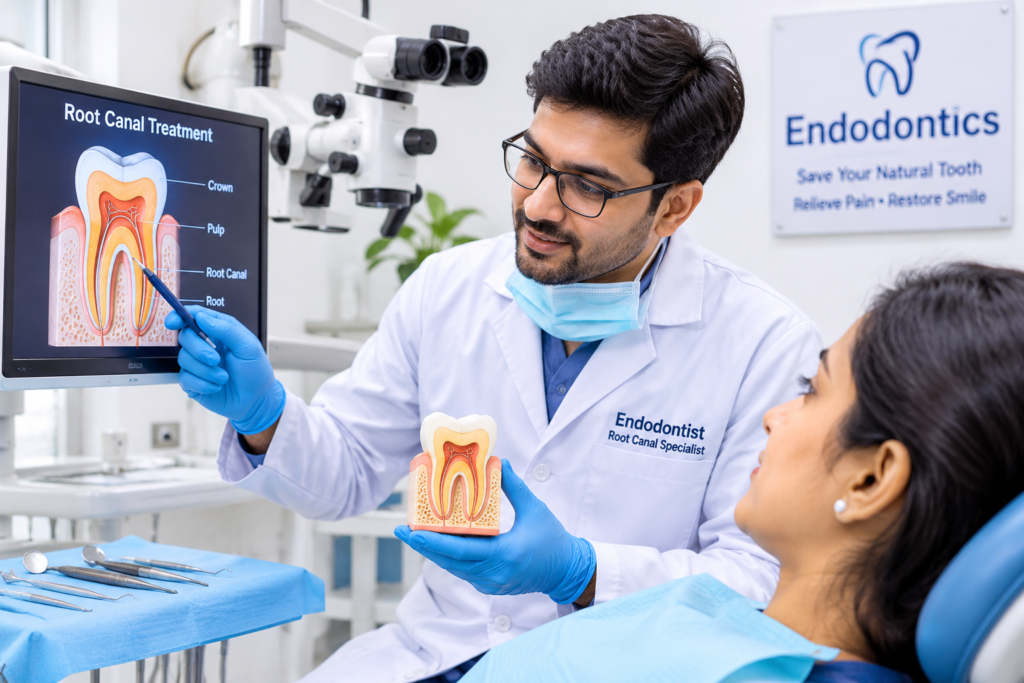
An endodontist is a dental professional who specializes in treating diseases and injuries affecting the dental pulp and the tissues surrounding the roots of teeth. The dental pulp is the soft tissue located inside a tooth. It contains nerves, blood vessels, and connective tissue that support tooth development and respond to certain stimuli.
When bacteria enter the pulp through deep tooth decay, cracks, fractures, or dental injuries, they can cause inflammation or infection. This may result in severe tooth pain, prolonged sensitivity, swelling, or the formation of a dental abscess.
Endodontists receive additional specialized training after completing dental school. This advanced training helps them manage complicated root canal cases, diagnose difficult dental pain, and perform procedures designed to save natural teeth.
Although general dentists can perform many root canal treatments, an endodontist may be recommended for complicated infections, unusual root anatomy, previously treated teeth, or cases requiring specialized techniques.
What Does an Endodontist Do?
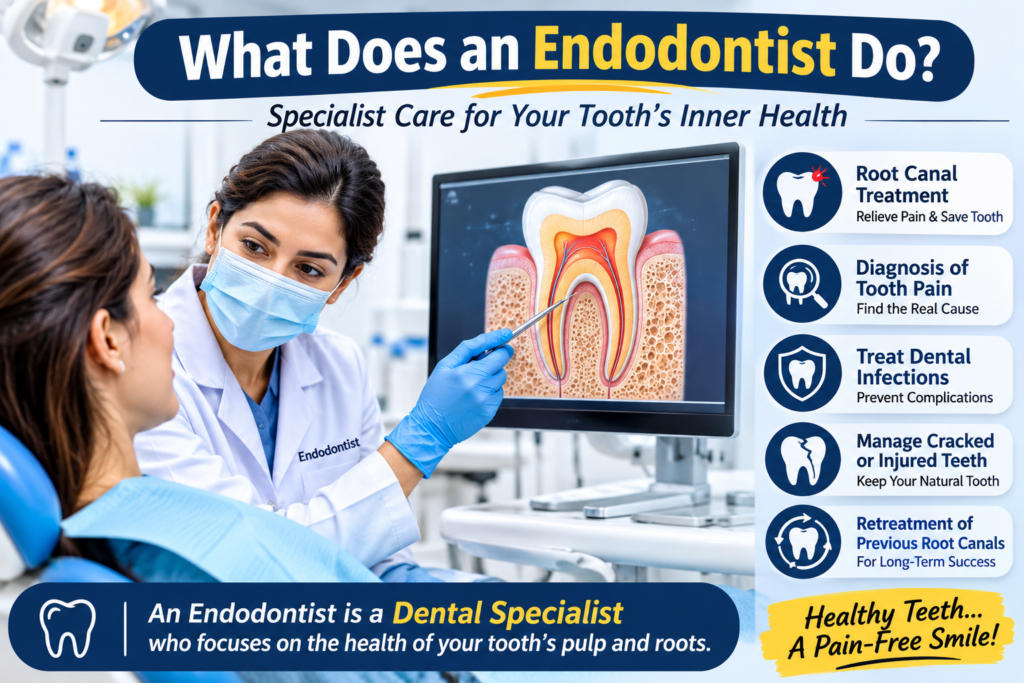
The primary goal of an endodontist is to relieve dental pain, treat infections inside teeth, and preserve natural teeth whenever possible.
Some of the main responsibilities of an endodontist include:
1. Root Canal Treatment
Root canal treatment is one of the most common procedures performed by endodontists. It is recommended when the dental pulp becomes inflamed or infected and cannot heal on its own.
During the procedure, the dentist removes the affected pulp tissue, cleans and disinfects the root canals, and seals the space with a suitable filling material. The tooth is then restored to help protect it from further damage.
Root canal treatment can relieve pain and help preserve a natural tooth that might otherwise require extraction.
2. Diagnosis of Tooth Pain
Tooth pain can occur for several reasons, including cavities, gum disease, cracked teeth, and pulp inflammation. An endodontist evaluates your symptoms, examines the affected tooth, and may recommend dental X-rays or other appropriate tests to determine the cause.
Accurate diagnosis is important because different dental problems require different treatments.
3. Treatment of Dental Infections
An infection inside a tooth may spread to the tissues around its root, potentially causing swelling, tenderness, or an abscess. An endodontist can assess the infection and recommend appropriate treatment, such as root canal therapy or another procedure, depending on the condition.
Prompt dental care can help prevent complications associated with untreated dental infections.
4. Treatment of Cracked or Injured Teeth
Dental injuries, accidents, and biting hard objects can damage teeth and sometimes affect the dental pulp. An endodontist evaluates the extent of the injury and determines whether the tooth can be preserved through endodontic treatment.
Early assessment is particularly important when a tooth is fractured or becomes painful following an injury.
5. Retreatment of Previous Root Canals
Occasionally, a tooth that has undergone root canal treatment may develop a new infection or continue to cause discomfort. This can happen because of persistent bacteria, complex root anatomy, or problems with the tooth’s restoration.
An endodontist may perform root canal retreatment to address the underlying issue and help save the tooth.
When Should You Visit an Endodontist?
You may need to consult an endodontist if you experience symptoms that suggest damage or infection inside a tooth.
Common warning signs include:
- Persistent or severe toothache.
- Sharp pain while biting or chewing.
- Prolonged sensitivity to hot or cold foods and drinks.
- Swelling or tenderness around the gums.
- A pimple-like bump on the gums near a tooth.
- Tooth discoloration following an injury.
- Pain that returns after previous root canal treatment.
- Dental pain following an accident or tooth fracture.
These symptoms do not always mean that root canal treatment is necessary. A dental examination is required to identify the cause and determine the most appropriate treatment.
Important: Swelling of the face, fever, or rapidly worsening dental pain may indicate a serious infection and requires urgent dental assessment. Difficulty breathing or swallowing requires emergency medical care.
What Is the Difference Between an Endodontist and a General Dentist?
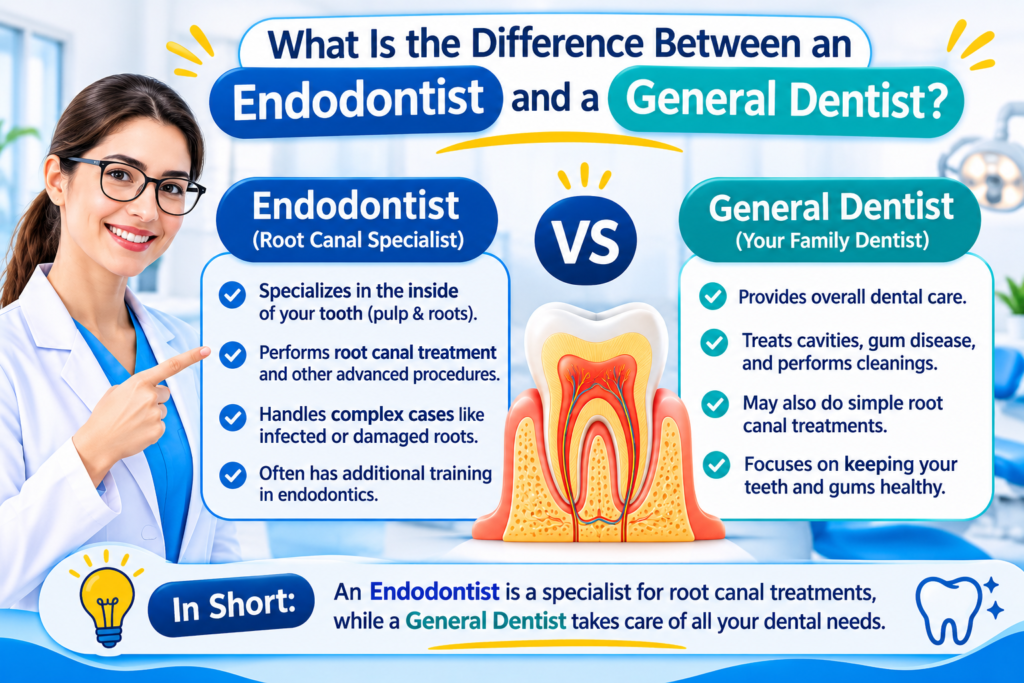
Both general dentists and endodontists help maintain oral health, but their areas of focus differ.
A general dentist provides a broad range of dental services, including routine examinations, professional cleaning, fillings, gum care, crowns, and preventive treatments. Many general dentists also perform root canal procedures.
An endodontist, on the other hand, focuses primarily on diagnosing and treating problems involving the dental pulp and tissues surrounding tooth roots. After dental school, an endodontist completes additional specialist training in this field.
You may be referred to an endodontist if your root canal treatment is particularly complex, your tooth has unusual root anatomy, or previous treatment has not resolved the problem.
The choice between a general dentist and an endodontist depends on the complexity of your dental condition and the expertise required.
What Happens During Root Canal Treatment?
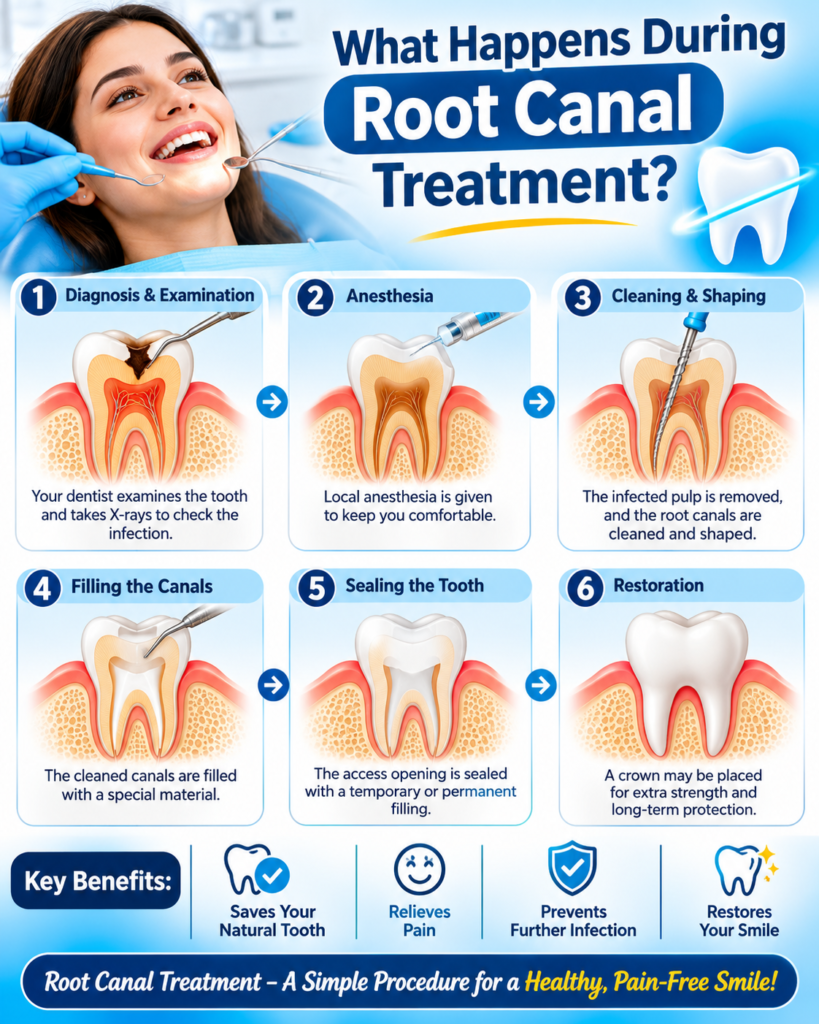
Understanding the root canal procedure can help reduce anxiety and make your dental visit more comfortable.
Although the exact process varies depending on the condition of the tooth, treatment generally involves the following steps.
Step 1: Dental Examination
The endodontist reviews your symptoms, examines the affected tooth, and may take dental X-rays to assess the roots and surrounding tissues.
Step 2: Local Anaesthesia
Local anaesthesia is usually administered to numb the affected area and improve comfort during the procedure.
Step 3: Removal of Infected Pulp
A small opening is made in the tooth to access the pulp chamber. The damaged or infected pulp tissue is then removed.
Step 4: Cleaning and Disinfection
The root canals are carefully cleaned, shaped, and disinfected to remove infected tissue and reduce bacterial contamination.
Step 5: Sealing the Root Canals
The cleaned canals are filled with a suitable biocompatible material and sealed to help prevent reinfection.
Step 6: Final Tooth Restoration
A filling or dental crown may be recommended to restore the tooth’s strength and function. The type of restoration depends on how much natural tooth structure remains and which tooth has been treated.
Following your dentist’s instructions and attending recommended follow-up appointments can help support recovery.
Is Root Canal Treatment Painful?
Many people worry that root canal treatment will be painful. However, modern dental techniques and local anaesthesia help make the procedure much more comfortable than many patients expect.
In most cases, the treatment is performed to relieve pain caused by inflammation or infection. Some tenderness or mild discomfort may occur after the procedure, but this generally improves as healing progresses.
If you experience severe or worsening pain after treatment, contact your dentist or endodontist for an assessment.
The duration and complexity of treatment depend on factors such as the tooth’s location, the number and shape of its roots, and the severity of the infection.
Benefits of Visiting an Endodontist

Consulting an endodontist when specialized treatment is needed can offer several benefits.
Preservation of natural teeth: Endodontic treatment can help save a damaged or infected tooth that might otherwise need extraction.
Relief from dental pain: Treating the underlying cause of pulp inflammation or infection can help reduce toothache and discomfort.
Specialized expertise: Endodontists receive additional training in diagnosing complex tooth pain and treating conditions involving tooth roots.
Management of complicated cases: Specialist care may be particularly helpful for retreatment, unusual root anatomy, and certain dental injuries.
Restoration of normal function: After appropriate treatment and restoration, a saved tooth can often continue to function for many years.
The long-term success of treatment depends on the condition of the tooth, the quality of the restoration, oral hygiene, and regular dental care.
How Can You Maintain Healthy Teeth After Endodontic Treatment?
Good oral hygiene is essential for protecting your treated tooth and maintaining your overall dental health.
Follow these simple recommendations:
- Brush your teeth twice daily using fluoride toothpaste.
- Clean between your teeth every day with dental floss or another recommended interdental cleaner.
- Visit your dentist regularly for examinations and professional cleaning when appropriate.
- Avoid chewing hard foods on a treated tooth until your dentist confirms that it is adequately restored.
- Get the recommended permanent filling or crown without unnecessary delay.
- Seek dental advice if pain, swelling, or unusual sensitivity develops.
A tooth that has undergone root canal treatment still requires regular care. Although the infected pulp has been removed, the surrounding gums and supporting bone remain important for the tooth’s long-term health.