
What’s the Difference Between a Dentist and an Endodontist?
When you experience tooth pain, sensitivity, or discomfort while eating, you may wonder whether you should visit a dentist or an endodontist. Both professionals are dental specialists who help maintain and restore oral health, but their training and areas of expertise are different.
A dentist provides comprehensive dental care, including routine check-ups, cleanings, fillings, gum care, crowns, and many other treatments. An endodontist, on the other hand, has advanced training focused primarily on the inside of the tooth, particularly the dental pulp and root canals. Endodontists commonly treat complicated tooth infections, severe tooth pain, and cases requiring root canal treatment.
Understanding the difference between a dentist and an endodontist can help you choose the appropriate dental professional for your specific needs.
Who Is a Dentist?
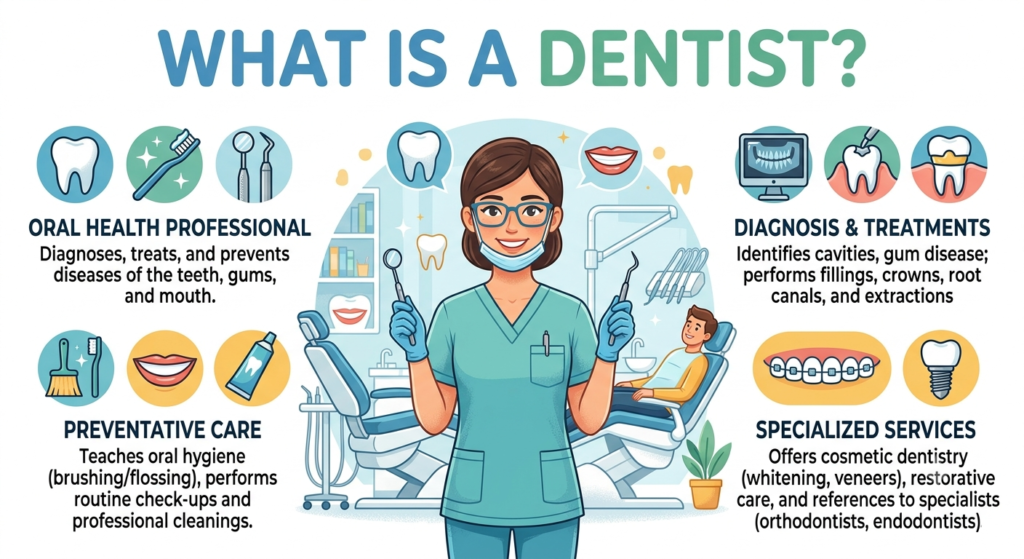
A dentist is a qualified oral healthcare professional who diagnoses, prevents, and treats a wide range of problems affecting the teeth, gums, and mouth. Dentists provide general dental care for patients of different ages and help maintain good oral hygiene and overall dental health.
Regular dental visits are important because many dental problems may not cause noticeable symptoms in their early stages. A dentist can identify cavities, gum disease, damaged teeth, infections, and other oral health concerns during routine examinations.
Common Treatments Provided by a Dentist
Depending on their qualifications and practice, dentists may provide services such as:
• Routine dental check-ups
• Professional teeth cleaning
• Dental fillings
• Treatment of cavities
• Gum disease management
• Dental crowns and bridges
• Tooth extraction
• Preventive dental care
• Treatment of minor tooth sensitivity
• Oral hygiene guidance
• Basic cosmetic dental procedures
A dentist is generally the first professional you should consult when you have a dental concern. After examining your teeth and identifying the problem, the dentist may provide treatment or refer you to a specialist when advanced care is required.
Who Is an Endodontist?
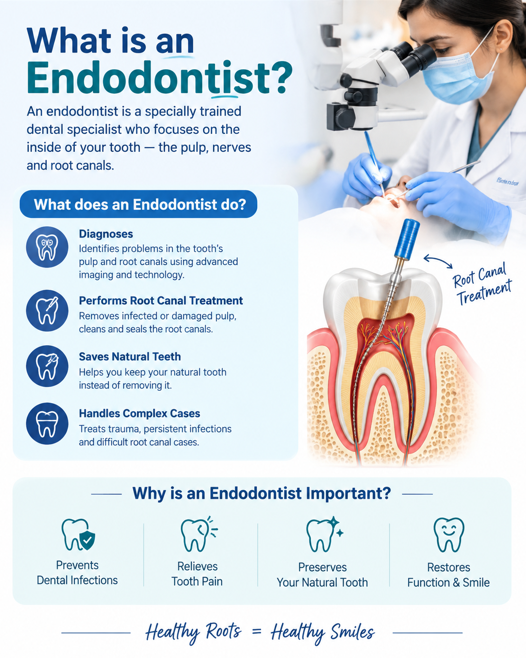
An endodontist is a dental specialist who focuses on diagnosing and treating problems involving the dental pulp and tissues surrounding the roots of teeth.
The dental pulp is the soft tissue located inside the tooth. It contains nerves, blood vessels, and connective tissue. When this area becomes inflamed or infected because of deep decay, cracks, trauma, or repeated dental procedures, it can cause significant pain and may require specialized treatment.
Endodontists receive additional specialized training after dental school. Their advanced education focuses on procedures involving the tooth’s internal structures, particularly root canal treatment and other endodontic procedures.
Dentist vs Endodontist: Key Difference
The primary difference between a dentist and an endodontist is the scope of their practice and specialization.
A general dentist handles a broad range of oral health problems, while an endodontist specializes in problems affecting the inside of the tooth and the tissues around its roots.
| Dentist | Endodontist |
|---|---|
| Provides general dental care | Provides specialized endodontic care |
| Treats a wide range of oral health problems | Focuses on dental pulp and root-related problems |
| Performs routine examinations and preventive care | Handles complex tooth pain and root canal cases |
| May perform routine root canals | Specializes in difficult or complicated root canal treatments |
| Treats cavities, gums, damaged teeth, and other conditions | Treats infected or inflamed pulp and root-related conditions |
| Often provides the first dental evaluation | Usually sees patients requiring specialized treatment |
Both professionals play an important role in maintaining oral health. The right choice depends on the condition affecting your teeth.
What Does an Endodontist Treat?
Endodontists commonly treat conditions involving the dental pulp and root of the tooth. These problems may occur because of untreated cavities, dental trauma, cracks, or previous dental procedures.
Some common conditions treated by an endodontist include:
1. Infected Tooth Pulp
When bacteria enter the inner part of a tooth, the pulp can become infected. This may lead to persistent toothache, sensitivity, swelling, or discomfort while chewing.
An endodontist can assess the condition of the tooth and determine whether root canal treatment or another procedure is appropriate.
2. Severe Tooth Pain
Persistent or unexplained tooth pain may sometimes originate from the pulp inside the tooth. An endodontist has specialized training in diagnosing complex sources of dental pain.
3. Root Canal Treatment
Root canal treatment is one of the most commonly associated procedures with endodontic care. During a root canal, infected or inflamed pulp is removed from inside the tooth. The root canal system is cleaned, shaped, and sealed to help prevent reinfection.
The goal is generally to remove the source of infection while preserving the natural tooth whenever possible.
4. Dental Trauma
A tooth can become damaged due to accidents, sports injuries, falls, or other trauma. Even if the tooth looks normal externally, the pulp inside may be affected.
An endodontist can evaluate traumatic dental injuries and recommend appropriate treatment.
5. Cracked Teeth
A cracked tooth may cause pain when biting or sensitivity to hot and cold foods. Depending on the location and severity of the crack, specialized evaluation may be necessary.
6. Failed Root Canal Treatment
Sometimes a previously treated tooth continues to cause symptoms or develops another infection. An endodontist may evaluate the tooth and determine whether root canal retreatment or another procedure is appropriate.
When Should You Visit a Dentist?
For most dental concerns, your dentist is the appropriate starting point. Regular dental check-ups can help detect problems before they become more complicated.
Consider scheduling a dental appointment if you experience:
- Toothache or recurring dental pain
- Tooth sensitivity
- Bleeding or swollen gums
- Bad breath that does not improve
- Cavities or visible tooth damage
- Difficulty chewing
- Loose or damaged teeth
- Tooth discoloration
- Dental trauma
- Problems with existing dental restorations
- A need for routine dental cleaning
A dentist can evaluate your symptoms and determine whether you need general dental treatment or specialized care.
When Should You See an Endodontist?
You may be referred to an endodontist when your dentist suspects a problem involving the dental pulp or roots of your tooth.
An endodontic consultation may be recommended if you have:
- Persistent or severe tooth pain
- Prolonged sensitivity to hot or cold
- Pain while biting or chewing
- Swelling around a tooth
- A dental abscess or suspected infection
- A tooth that has experienced significant trauma
- A cracked or injured tooth
- Complications from previous root canal treatment
- Persistent symptoms after a root canal
- A complicated root canal case
It is important not to ignore persistent tooth pain. Delaying treatment of an infected tooth can allow the problem to become more complicated.
Is an Endodontist Better Than a Dentist?
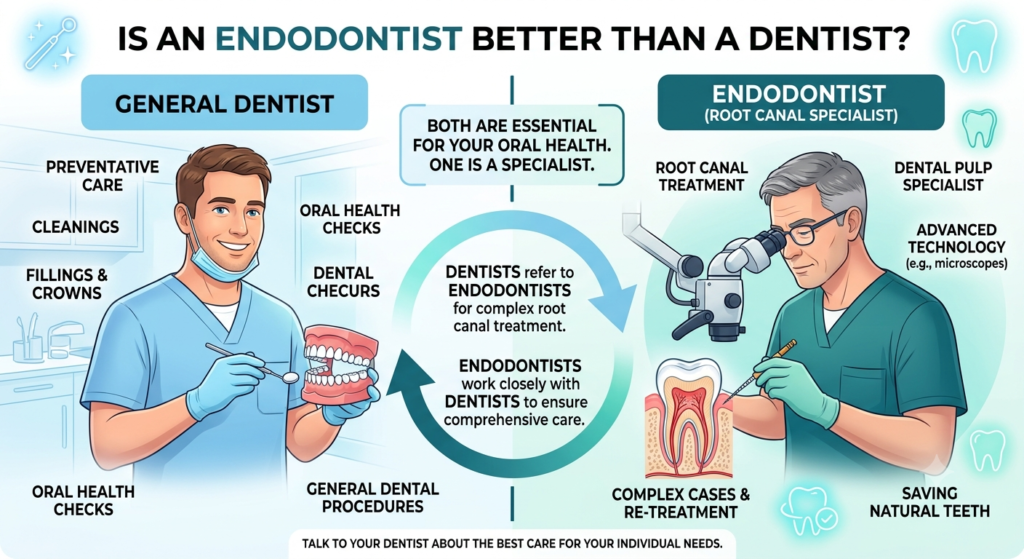
A dentist and an endodontist serve different purposes, so it is not simply a question of one being better than the other.
For routine dental care, preventive treatment, cavities, gum concerns, and general oral health, a dentist is usually the appropriate professional.
For complex problems involving the dental pulp, roots, or difficult root canal procedures, an endodontist has specialized training that may be particularly relevant.
In many cases, a dentist will initially examine your tooth and refer you to an endodontist if specialized treatment is needed.
What Happens During an Endodontic Examination?
When you visit an endodontist, the examination may include a discussion about your symptoms and dental history. The specialist may perform clinical tests and use dental imaging when necessary.
The examination can help determine:
- Where the pain is coming from
- Whether the dental pulp is inflamed or infected
- Whether the tooth has a crack or injury
- Whether the surrounding tissues are affected
- Whether root canal treatment is required
- Whether the natural tooth can be preserved
Based on the findings, the endodontist will discuss appropriate treatment options.
How Is Root Canal Treatment Different From a Regular Dental Filling?
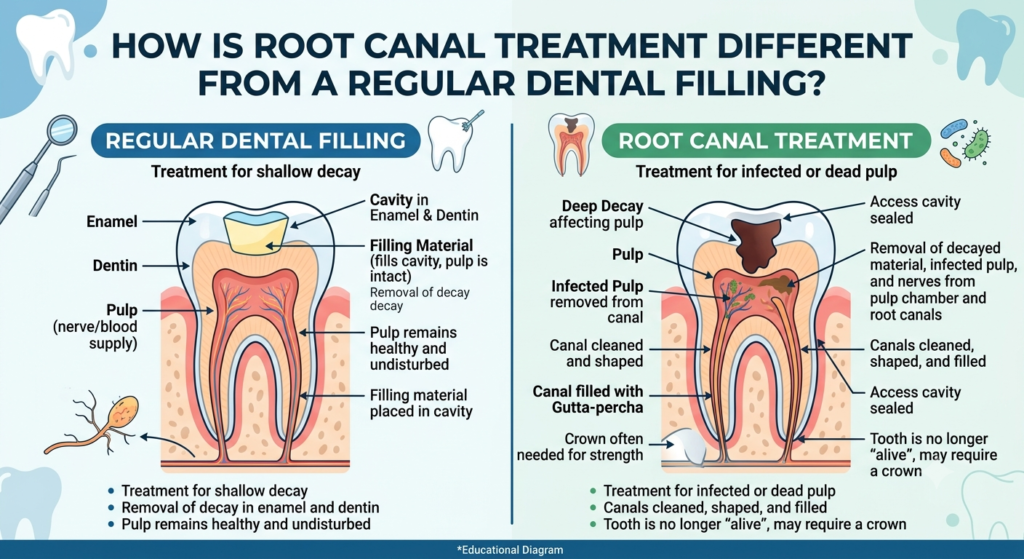
A dental filling and root canal treatment address different problems.
A dental filling is generally used when decay has damaged the tooth but the inner pulp remains healthy enough to be preserved.
A root canal treatment may be required when the pulp becomes infected or severely inflamed. The damaged pulp is removed, the internal canals are cleaned and disinfected, and the tooth is sealed.
Early treatment can sometimes prevent a minor dental problem from progressing into a more complex condition.
Can a Dentist Perform a Root Canal?
Yes, many general dentists are trained to perform routine root canal treatments. However, some cases can be more complicated because of factors such as unusual root canal anatomy, previous treatment, severe infection, or dental trauma.
In such situations, a dentist may recommend consultation with an endodontist.
The decision depends on the individual tooth, the complexity of the case, and the dentist’s assessment.
Benefits of Seeing the Right Dental Professional
Choosing the appropriate dental professional can help you receive timely and suitable care.
Early Diagnosis
A dental professional can identify the source of symptoms and determine whether the problem requires general or specialized treatment.
Tooth Preservation
Endodontic treatment is often focused on preserving a natural tooth when possible rather than immediately removing it.
Specialized Care
For complex root canal problems, an endodontist’s additional training can be valuable.
Prevention of Complications
Timely treatment may help prevent dental infections and other complications from progressing.
How Can You Prevent Root Canal Problems?
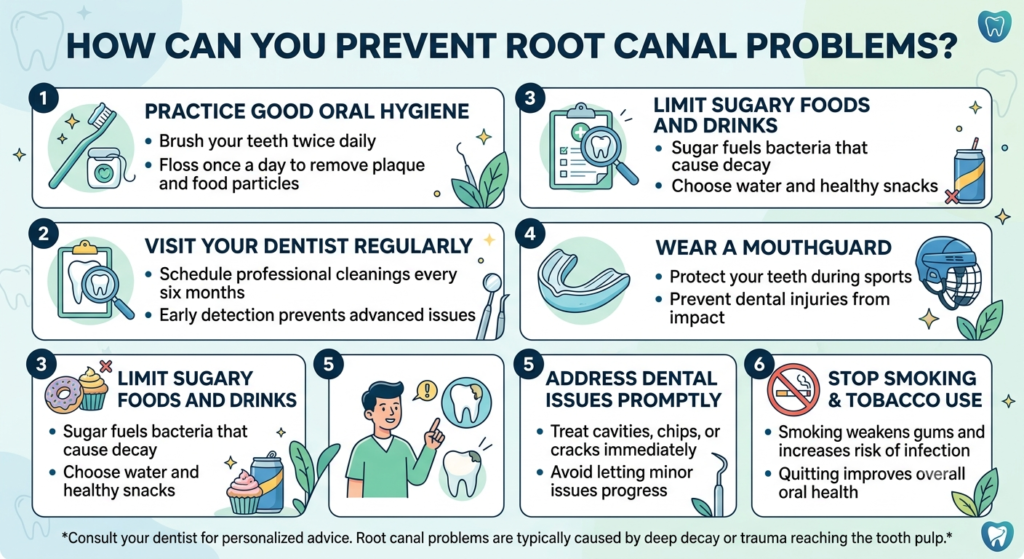
Although not every dental problem can be prevented, good oral hygiene can reduce the risk of tooth decay and other conditions that may eventually affect the dental pulp.
Follow these basic dental care habits:
- Brush your teeth twice a day with fluoride toothpaste.
- Clean between your teeth regularly.
- Limit frequent consumption of sugary foods and drinks.
- Visit your dentist for regular dental examinations.
- Do not ignore persistent tooth pain or sensitivity.
- Wear appropriate protective equipment during contact sports.
Dentist or Endodontist: Which One Should You Choose?
If you are unsure whether your symptoms require a dentist or an endodontist, starting with a dentist is often a practical approach. A dental examination can identify the likely cause of your symptoms and determine whether specialist care is necessary.
If the problem involves the dental pulp or requires a complex root canal procedure, an endodontist may be recommended.
The most important step is to avoid ignoring persistent dental symptoms. Tooth pain, swelling, prolonged sensitivity, or discomfort while chewing can be signs that professional evaluation is needed.
Frequently Asked Questions
Is an endodontist a dentist?
Yes. An endodontist is a dentist who has completed additional specialized training in endodontics, the area of dentistry concerned primarily with the dental pulp and tissues surrounding the roots.
Do I need a referral to see an endodontist?
This depends on the dental practice, healthcare system, and your situation. Some patients can contact an endodontist directly, while others are referred by their general dentist.
Does an endodontist only perform root canals?
No. Although root canal treatment is a major part of endodontic care, endodontists also diagnose complex tooth pain, treat dental trauma, manage certain cracked teeth, and perform procedures such as root canal retreatment.
Can a dentist treat an infected tooth?
A dentist can diagnose and treat many dental infections. Depending on the location and severity of the infection, treatment may involve a filling, root canal treatment, extraction, or referral to an endodontist.
Is tooth pain always a sign that I need a root canal?
No. Tooth pain can have many causes, including cavities, gum problems, sensitivity, cracked teeth, trauma, or other dental conditions. A professional examination is needed to determine the actual cause.
Conclusion
The difference between a dentist and an endodontist mainly comes down to their area of expertise. Dentists provide comprehensive oral healthcare, including preventive services, routine dental treatments, fillings, gum care, and many restorative procedures. Endodontists receive additional training focused on the dental pulp, tooth roots, complex tooth pain, dental trauma, and root canal treatment.
If you have a routine dental concern, a dentist can provide an initial examination and appropriate care. If your problem involves a complicated root canal, persistent tooth pain, pulp infection, or dental trauma, an endodontist may provide specialized treatment.
If you are experiencing ongoing tooth pain, sensitivity, swelling, or discomfort while chewing, consider scheduling a professional dental examination rather than waiting for the symptoms to worsen. Early evaluation can help identify the problem and guide you toward the appropriate treatment for maintaining your oral health.